note : *This will be the second part of talking about the different courts in the UK . I didn’t want to cram all of this into one post , so i decided i would split it into different part . This will help me to get a better understanding of all the courts , rather then me getting brief knowledge about each court .*
Summary of the Previous Blog on the Judicial System in the United Kingdom
So in the last post about UK courts i mentioned that they have a hierarchical structure . I also mentioned that the courts in the UK can be split into 2 different categorize which is either a civil court or a criminal court . Civil courts handles disputes between each parties concerning cases such as property disputes , contract disputes or personal rights . Civil courts can resolve these disputes by giving either an injunction (which they will be held against there will to commit a particular act) or a compensation (which means they must pay a fine on behalf of there crime.)
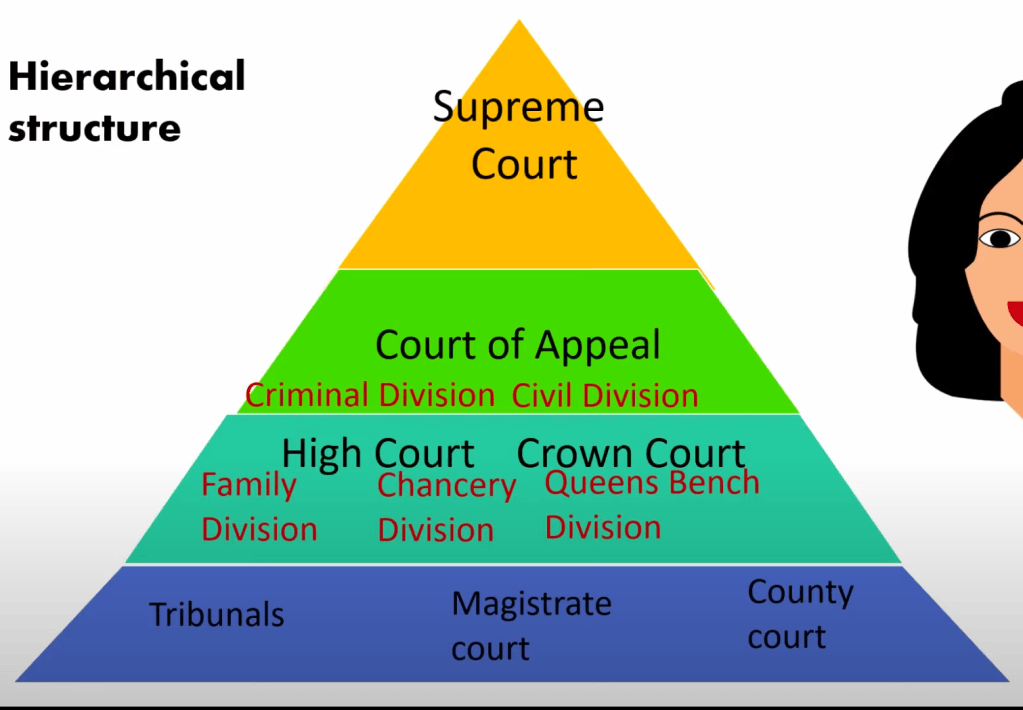
while with a criminal court they aim to resolve issue in which an individual can be accused of breaking the law these crime could be either murder , theft , assullt or drug offences cases . Criminal court then will decides if this individual that is being accused of a crime is either guilty or innocent and if they are guilty the court will decide on what the punishment for that individual could be . I also started to talk about 1 type of court that we have in the UK which is a Tribunal . Tribunal tend to significantly differ from other courts as they are less formal then other ‘traditional’ courts . Tribunal courts tend to be less strict on the evidence provided . It is also to be said that when in comes to a Tribunal court they are more specialized in particular areas of law such as tax , employment and immigration cases . With all of that recap from the last blog , i will know go back to talking about the other types of courts in the UK .
Magistrate court
Magistrate court is a court that falls into the criminal court category , they deal with minor criminal acts which can can also be called summary offences . These offences could be motoring offences , minor criminal damage and common assault . In a magistrate court they do not have a jury rather the cases are dealt by either a district judge or a magistrate which is an individual that is trained and has volunteer as a member of the local community to make decisions in a magistrate court . However magistrate courts can deal with either way offence which means they can be heard by either a magistrate court or a crown court , these offences are more serious offences such as burglary and drug offences . In cases of very serious crimes such as murder , rape and robbery they would be passed on to the crown court (which deals with indictable offences) . The sentences that a magistrate court can give are up to 6 months in prison , a fine , community sentence or ban . If the sentences is longer than 6 months the magistrate court will pass the case over too the Crown court for longer sentencing .
county court
County courts fall into the category of civil courts , they deal with disputes between individuals , business or organization . These disputes could be matters like debt recovery , breach of contract , or disputes over property or personal injury . As this is a civil court they will not give criminal sentences like imprisonment or fines , instead county courts can issue various civil remedies such as monetary judgments(Ordering one party to pay money to another party) , injunctions , orders for specific performance (Requiting a party to fulfill their contractual obligations) , possession orders (Ordering a person or entity to give up possession of property) or a judgment orders . In a county court there are 3 types of judges which are district judge , circuit judge (they hear more serious or complex cases in the Crown court or County court) and recorder (is also a legally qualified professional who can serve as a judge in a County Court. a recorder typically holds part-time positions and may have other legal roles outside of their judicial duties) .
Links to the websites :
 study.blog