note : *This will be the third part of talking about the different courts in the UK . I didn’t want to cram all of this into one post , so i decided i would split it into different part . This will help me to get a better understanding of all the courts , rather then me getting brief knowledge about each court .*
Summary of the Previous Blog on the Judicial System in the United Kingdom
So in the last post about UK courts i mentioned 2 types of courts . The first court i mentioned was a criminal court which was a Magistrate court . This court deals with minor criminal offences which can also be refereed to as summary offences . However the magistrate courts still deal with either way offences which can be either handled by a the magistrate court or the crown court , these are more serious crimes . In cases of indictable offences(such as murder , rape or robbery) the magistrate court will have to pass it to crown court . It is to be said that in a Magistrate court they do not have a jury , instead there is a district judge or 2 to 3 magistrates from the local community that have been trained to make decisions on behalf of the magistrate court.
Lastly i looked at what county courts are . County courts fall into the civil courts category , they deal with disputes between individuals , business or organization . These disputes could be either debt recovery , breach of contract or disputes over property or personal injury . County court will resolve these disputes by either providing remedies such as monetary judgments , injunctions , orders for specific performance , possession orders or a judgment order . In a County court there are 3 types of judges which is a district judge , circuit judge and recorder . That is all of the recap of last blog , now i will go on to discuss about crown court first .
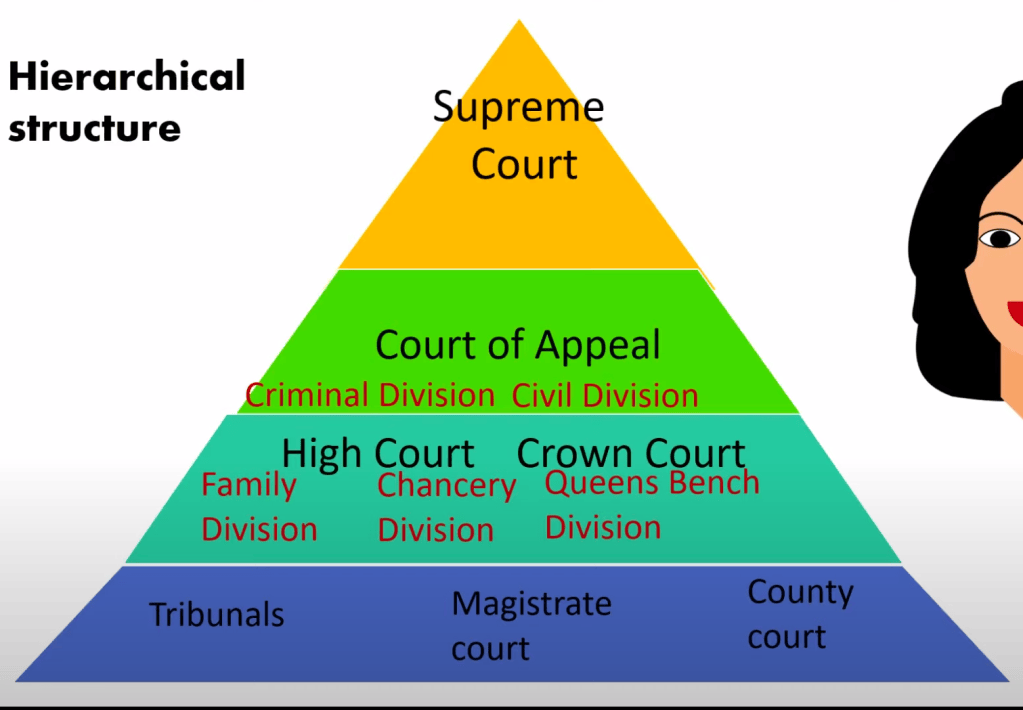
Hierarchical court system in the UK
Crown court
The crown court fall into the Criminal court category . This court will deal with indictment offences (serious offences) , these offences could be murder , rape or robbery . Such like a County court they have 2 types of judges which are a circuit judge or a recorder .It is also to be said that in a Crown court they have a jury (this is made up of 12 random individuals) as well , they decide if the verdict is guilty or not .In a Crown court they can give a range of sentences such as community sentences , prison sentences or life sentences . They also deal with appeals made by the magistrate court , cases can be passed from a magistrate court for sentencing .
High court
The High court falls into category of a civil court . This court is divided into three divisions which are Family , Chancery and Queens Benches division . In the family division the High court will deal with matters like divorce and separation , child custody and access , child protection , adoption , financial provision , domestic violence and international family law . In the chancery division the High court will deal with matters like property laws , trusts and probate (matters such as trusts,wills,inheritance disputes) , intellectual property(cases involving trademarks,copyrights) , commercial contracts(disputes over contract claims , sales of goods disputes and contractual interpretation issues) , banking and financial services(banking law,financial regulation and investment disputes) and Equitable remedies . Lastly in the queens benches division the High court will deal with matter like personal injury claims , contract disputes , commercial disputes and tort claims(Cases involving claims for damages resulting from civil wrongs , such as negligence , trespass or nuisance) . The High court have 4 main type of judges which are high court judges (they are full-time professional judges who hear a wide range of cases across various divisions of the high court) , Lords justices of appeal (these judges will hear appeals from lower courts and then decide if they should be upheld or overturned) , Masters and registrars (they assist with case management , procedural matters and certain types of hearing) and specialist judges (They are judges specialized in particular area of law) .
 study.blog